How to help hedgehogs

"A hedgehog-friendly garden"

Make a hedgehog highway

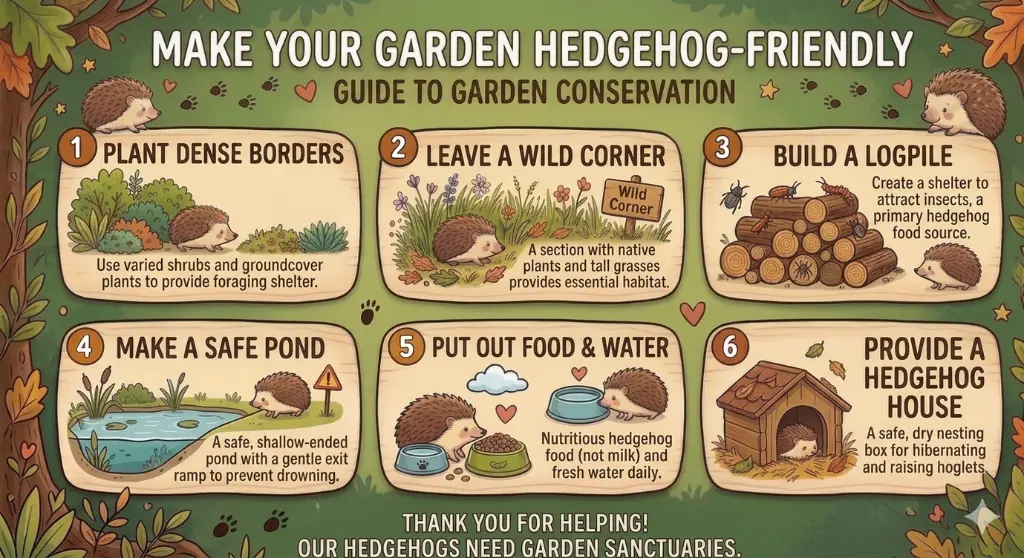
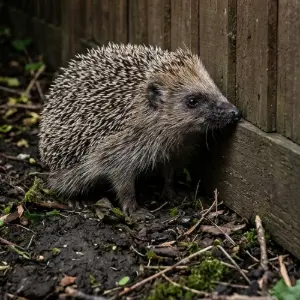
"Hedgehog outside fence"So now you have a wonderful garden for hedgehogs, with dense borders for them to forage safely, a wild corner and a logpile to attract insects for them to eat, a safe pond that they can drink from, additional water and food provided nightly, and even a hedgehog house.

Remember that now that hedges have gone out of fashion and been replaced by secure fencing, hedgehogs are denied access to the places they need to forage for food. 
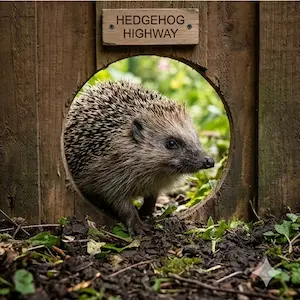
"Hedgehog highway"A hedgehog can’t enjoy your garden if it can’t get in!

Help them by making a Hedgehog Highway.

Cut a hole 12cm square (the size of a CD box) in a fence or leave space under a gate so that hedgehogs can pass from one garden to another.

Talk to your neighbours and link your gardens with a hedgehog highway so that hedgehogs can pass safely from one garden to another.

Supplementary Feeding

What to feed

Hedgehogs often struggle to find fresh water and enough to eat. You can help by putting out shallow bowls of water and some dry cat or kitten biscuits. Any brand is fine provided that the protein content is at least 30%.

Unlike cat and dog food, commercial “Hedgehog Food” is not regulated in the UK, which means that it doesn’t have to contain what it says on the packaging and in practice can frequently contain things that are harmful to hedgehogs. Therefore best avoided, unless purchasing a trusted brand. (Vale Wildlife Hospital produces good quality hedgehog food.)

If you want to offer wet food as well as dry food, then any dog or cat food is fine. Hedgehogs really don’t care whether their meat is in jelly or gravy, and whether it previously walked or swam. It is a myth that hedgehogs don’t like fish. (Certainly they don’t often eat fish in the wild – but neither do they often eat cows or chickens. They are simply opportunists.)

What NOT to feed

Everyone knows that hedgehogs love mealworms. It’s like giving a small child sweets – they can’t get enough. They’d be happy to eat them to the exclusion of all else. Just like small children, they have no idea of whether something is good for them as long as it tastes good!

What hedgehogs don’t know but we do, is that mealworms are extremely high in phosphorus, creating a severe calcium-to-phosphorus imbalance. To compensate, the hedgehog’s body strips calcium directly from its own bones. This leads directly to Metabolic Bone Disease (MBD) which causes severe bone softening, leg deformities, mobility issues and spontaneous fractures, and is incurable.

Hedgehogs are lactose intolerant. Consuming milk or other dairy products causes severe diarrhea, which can quickly lead to dehydration and prove fatal. 

Nuts and seeds are a choking hazard to hedgehogs, and can also get stuck in a hedgehog’s teeth or the roof of its mouth. 

They cannot properly digest fresh or dried fruit, which simply upsets their stomachs.

Raw meat or eggs carry a high risk of salmonella, while processed foods like ham or bacon are dangerously high in salt.

Hedgehogs are wild animals – they don’t crave treats, they don’t get bored with what they eat – they just need an adequate supply of good, nutritious food.

When to feed

Most hedgehogs hibernate for some or all of the winter. The reverse of that statement is that some hedgehogs don’t hibernate for the whole winter, so there is always the possibility that a hedgehog is awake and hungry at any time.

If you really want to help, then it is important to put at least some food out all year round. If dry food hasn’t been touched, it can be left for a few days before being changed. If food is being taken, then it is obviously needed and should be replenished daily.

How to feed

The easiest way to feed hedgehogs is to scatter some cat or kitten biscuits on the ground – although it isn’t as easy to clear up any left-over food that way.

Most people prefer to put out shallow bowls of food that are easy to clean out and refill. (Remember to use a shallow bowl as hedgehogs only have short necks.)

If you prefer to give both the food and the visiting hedgehogs a bit of shelter from the elements, then the next step is to put the food inside a feeding station – always leave the water outside. There are various feeding stations available to buy, and plenty of ideas on the internet for making your own. 

A feeding station should preferably have 2 entrances/exits, so that a hedgehog can escape from an aggressor if necessary. Predator proof entrances can keep cats or foxes out, and plastic flaps or a curtain of fine chains over the entrances will normally deter rats but bother the hedgehogs not at all.

Avoidable harms

"Litter"

Litter

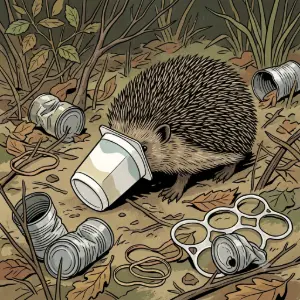
The rubbish and litter that we leave lying around can pose dangers to curious or hungry hedgehogs. They have been known to get their head trapped in yoghurt cartons, tin cans, or the plastic rings from packs of beer cans or to get tangled in discarded fishing line or elastic bands. Dispose of your litter responsibly in a bin or take it home with you and bin it.

"Hog trapped in a hole"

Uncovered drains and holes 

Many hedgehogs die after falling into uncovered drains or post holes. They either drown or starve to death.

The solution is easy! Please keep your drains covered.

If you have to dig a hole that will not be refilled the same day, then cover it safely overnight.


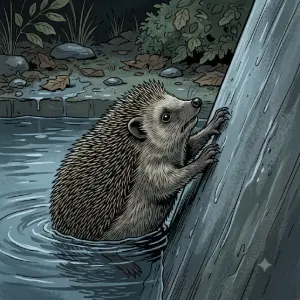
"Hog trapped in pond"

Steep-sided ponds

Many hedgehogs drown each year through falling into a pond from which there is no escape. 

Hedgehogs can swim but not forever.

Please provide a means of escape via a plank into the water, or shallow edges like pebble beach or a couple of big stones partially submerged at the edges, or heavy planting round the edge so that hogs can climb out.

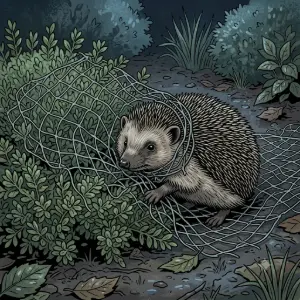
"Hog trapped in netting"

Netting

Garden netting can seriously injure or even cause the death of hedgehogs that become entangled.

Leave a 12” gap between the ground and the bottom of the netting so that small animals can walk underneath safely. 

Football or tennis nets should be raised off the ground when not in use.


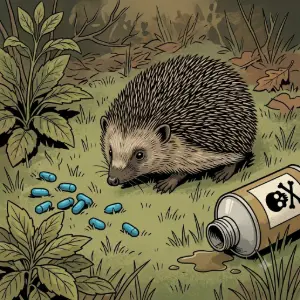
"Pesticides"

Pesticides

Slug pellets and other pesticides are toxic to hedgehogs and can be fatal.

If possible avoid the use of such pesticides and slug pellets, or use alternative methods such as garlic wash (see Hosta Society website), copper bands, beer traps, broken eggshells, grit, etc.


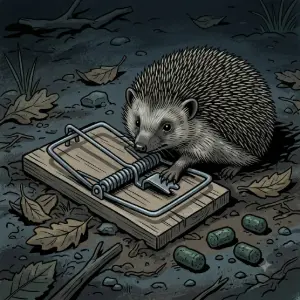
"Hog and trap"

Rat Poison and traps

Rat or mouse poison will also kill any hedgehog that eats it.

If you must use traps at all, please use humane ones.

Put them at least 2 feet above ground to avoid the possibility that small hedgehogs can be caught in them.


"Hog threatened by dog"

Dogs

In a garden situation especially during darkness please check for hogs before allowing your dogs into the garden. If your dog does attack a hedgehog the hog needs checking over by either a rescue or a vet as soon as possible as there could be hidden puncture wounds on the hog.


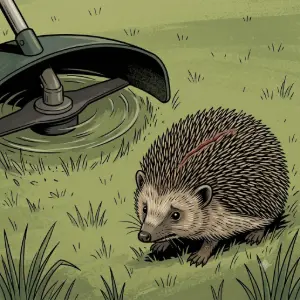
"Strimmer near hog"

Grass cutting

Careless operation of strimmers and lawnmowers can cause terrible injuries and/or death to hedgehogs that are hiding in long grass.

Please spend a few minutes checking long grass and undergrowth BEFORE commencing working with these machines.


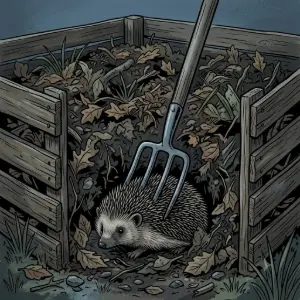
"Hog threatened by garden fork"

Garden forks

Too many hedgehog injuries and deaths are caused by gardeners who plunge a garden fork into a compost heap/bin without realizing there may be a hedgehog in the compost.

Please try and check the compost

before digging into it.


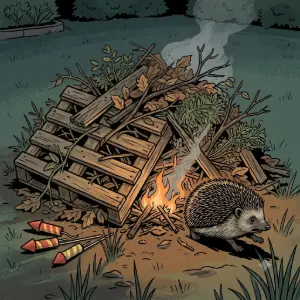
"Hog fleeing bonfire"

Bonfires

Many hedgehogs are burnt to death after crawling into a pile of wood that is intended as a bonfire.


Please check your bonfire pile before lighting it or better still don’t construct the pile until immediately

before you are ready to set fire to it.


Scroll to Top

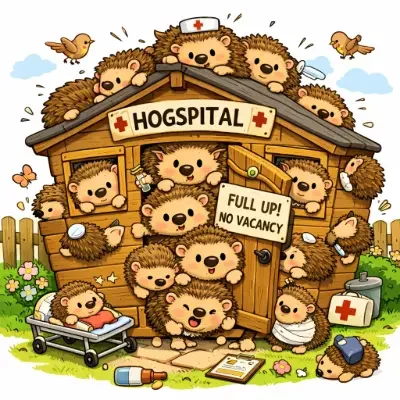
The Rescue is currently full

We are closed to new admissions until space becomes available

"Hogspital full"
"Hogspital full"

If you have found a hedgehog in need of help, follow the instructions on our Home Page to find alternative rescues, or take it to a local Veterinary practice.

Please help us to care for our current residents

Support Us